Leave Your Message
Choosing the right Abc Puzzle Mat for wholesale involves more than comparing unit prices. Retailers and distributors need a product that suits young learners, stores efficiently, and arrives consistently across repeat orders. Foam density, tile thickness, edge fit, and surface texture can affect how the mat feels during daily play. Color clarity matters too, especially when letters must remain easy to recognize under ordinary indoor lighting. Small details matter.
Packaging deserves equal attention. Compact cartons can reduce storage pressure, while clear labeling helps staff check sets quickly. A dependable supplier should explain material specifications, available sizes, minimum order quantities, sample options, and realistic production lead times. Ask how color, dimensions, and interlocking fit are checked before shipment. Then compare quotations on the same basis, rather than choosing the lowest price alone.
Request a sample. A hands-on review can reveal loose joints, strong odors, rough edges, or print differences that product photos may hide. Supplier documents and test information can support your assessment, but verify that they match the exact model you plan to order. Wholesale decisions also depend on your customers: a preschool, toy shop, and online seller may value different pack sizes and designs. This guide outlines practical criteria for comparing options, asking sharper supplier questions, and balancing product quality with landed cost. There is no perfect mat for every buyer. Your best choice is the one whose verified details fit your customers and reorder plans.
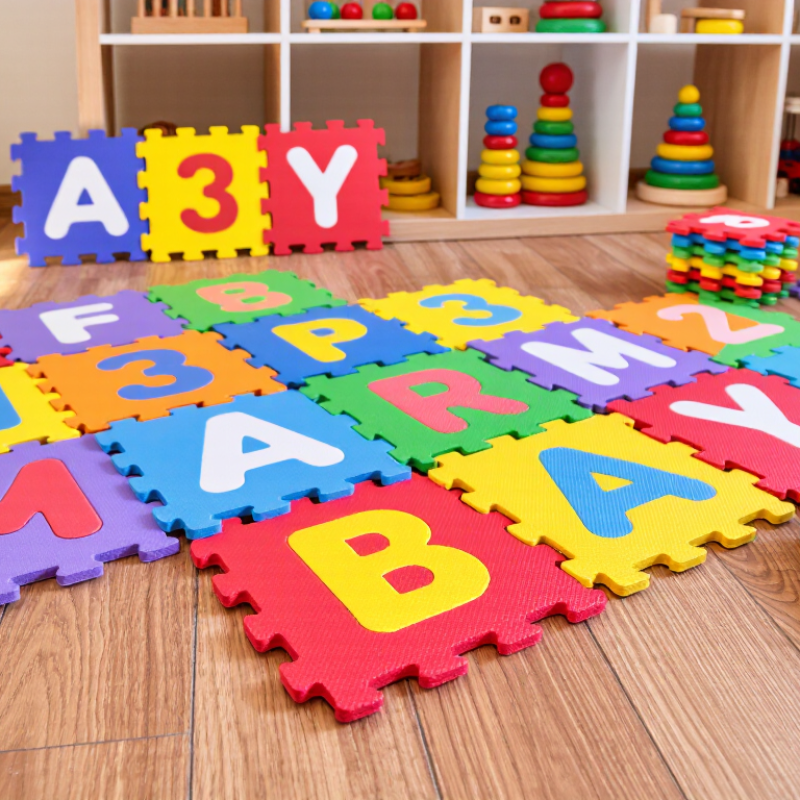
Define the order before comparing ABC puzzle mats. Confirm the destination market, target age, tile count, finished size, thickness, material, and color mix. Ask whether buyers need letters only or numbers and animal shapes too. Small choices change tooling, packing, and carton volume. Measure a sample assembled on a real floor; a mat that looks generous in a catalog may feel cramped beside a play table.
Demand data can guide the first assortment, but not replace buyer research. Circana reported that toy sales across 12 tracked global markets fell 7% in 2023. That suggests caution with an oversized opening order, not a reason to remove popular basics. Set a trial quantity, reorder threshold, and acceptable production lead time. Keep it practical. For safety documentation, identify the destination market and request applicable test reports. In the United States, review CPSC requirements and ASTM F963 with a qualified testing laboratory; requirements vary by product and age grade. Check foam odor, tile fit, surface grip, and edge quality on production samples. I would not assume every color behaves alike. Request carton dimensions, gross weight, packing photos, and MOQ in writing, then compare landed cost per complete mat—not just the unit price. A pilot order can still miss the mark. That is useful feedback.
| Requirement | What to Define | Wholesale Considerations |
|---|---|---|
| Target market and age group | Specify the country or region, intended users, and age grading. Decide whether the mat is for home play, childcare settings, or another use. | Safety rules and labeling obligations vary by market and product classification. Confirm applicable requirements before approving production. |
| Tile size and set configuration | Set the dimensions of each tile and the number of tiles per retail set. Common formats include square interlocking tiles, but sizes and pack counts vary. | Check that the assembled mat covers the intended floor area. Confirm whether border pieces are included and how the set will be packed. |
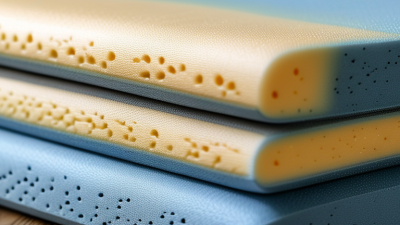
| Material and construction | Define the foam material, surface finish, color, odor expectations, and whether the tiles are single-layer or laminated. | Request material specifications and representative samples. Verify that materials and finishes meet the requirements of the destination market. |
| Thickness and cushioning | Choose a thickness based on the intended use, floor surface, and desired level of cushioning. State the acceptable thickness tolerance. | Assess the sample for firmness, compression recovery, and fit between tiles. Avoid describing the mat as protective flooring unless supported by suitable testing. |
| Interlocking fit | Specify the puzzle-edge design, connection tightness, and acceptable gaps or height differences between connected tiles. | Test multiple tiles together, including pieces from different production samples, to check assembly, stability, and edge alignment. |
| ABC artwork and readability | Define the alphabet style, letter sequence, colors, contrast, and whether letters are removable or printed on the tiles. | Approve a full-size artwork proof and physical sample. Check that removable pieces are accounted for in the product’s safety assessment and age grading. |
| Safety and compliance documentation | List the regulations and test reports required for each sales market. For example, children’s products sold in the United States may be subject to applicable CPSC requirements, including relevant provisions of ASTM F963 and CPSIA. | Ask for documentation that matches the exact product, materials, and intended age group. Requirements differ by market; confirm current rules with a qualified compliance professional. |
| Cleaning and care | Define approved cleaning methods and any care instructions that should appear on the packaging or insert. | Check that the instructions are consistent with the material and are supported by product testing. Avoid unsupported claims such as “waterproof” or “antibacterial.” |
| Packaging and labeling | Specify retail packaging, language requirements, warnings, instructions, barcode placement, and carton markings. | Confirm packaging dimensions, packing quantity, and protection against dirt or damage during shipping. Review final artwork before mass production. |
| Order quantity and price basis | Set the expected order quantity, price target, reorder volume, and whether pricing is based on a standard or customized specification. | Request written quotations that identify the quantity breaks, included packaging, tooling or setup charges, and any conditions that affect the unit price. |
| Production and delivery schedule | Agree on sample approval dates, production lead time, inspection timing, and the required shipping window. | Build in time for testing, artwork approval, production checks, and freight. Confirm the shipping terms and who is responsible for each delivery cost. |
| Quality inspection criteria | Set measurable acceptance criteria for dimensions, color, odor, surface finish, interlocking fit, and packaging condition. | Use an approved reference sample and a written inspection checklist so that production lots can be assessed consistently. |