Leave Your Message
Choosing Interlocking Gym Mats in 2026 requires more than comparing prices, colors, and attractive product photos. The right surface must match the room, equipment, training style, and maintenance routine. A compact home gym may need lightweight EVA tiles, while a commercial strength area usually demands denser rubber with stronger shock absorption. Small details matter. Think about dropped dumbbells, damp shoes, rolling benches, and seams that slowly separate.
Flooring specialist Tom Testa offers a practical reminder: “A gym floor should support the workout, not become another problem to manage.” That idea guides this article. We will examine thickness, material density, surface texture, odor, water resistance, edge alignment, and installation effort. We will also consider whether the existing subfloor is level and dry. It sounds basic. It is often overlooked.
There is no perfect mat for every facility. A thick tile may protect concrete better, yet it can feel unstable under certain machines. Softer foam may feel comfortable during stretching, but it may dent beneath heavy racks. My own evaluation would not rely on one specification alone. Product claims can look convincing, but real performance depends on usage, ventilation, cleaning, and the floor beneath. This guide compares those practical trade-offs, helping readers choose Interlocking Gym Mats with clearer expectations and fewer expensive surprises. Even experienced buyers can miss one issue: the best-looking installation is not always the safest or most durable one.
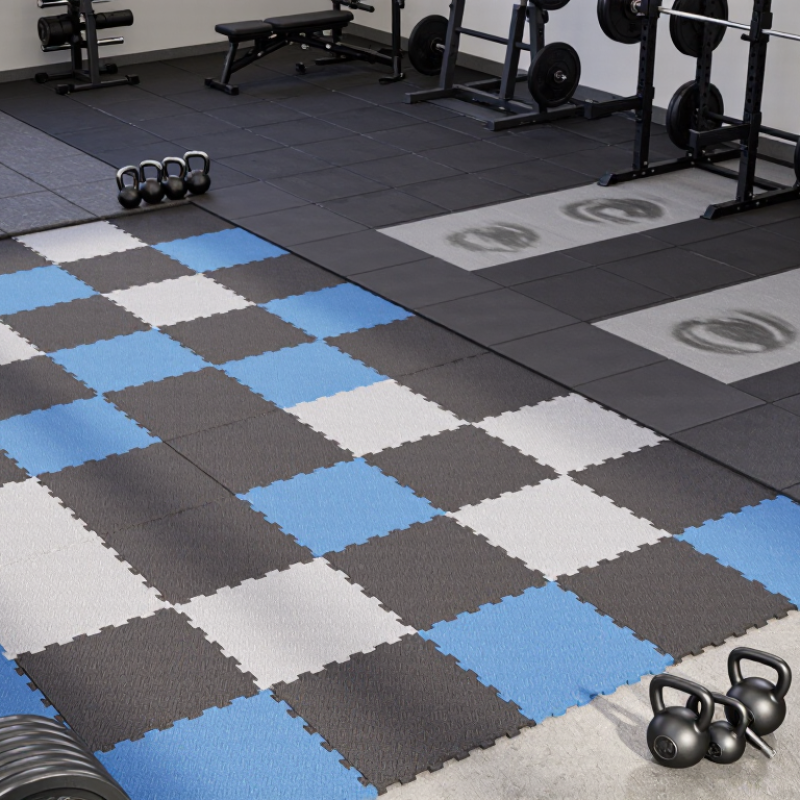
2026 How to Choose Interlocking Gym Mats?
Interlocking gym mats are modular floor tiles with puzzle-like edges. You press the pieces together to create one connected surface. Most are made from dense EVA foam or rubber. The material cushions steps, lowers noise, and protects floors from scratches. It also gives better grip during stretching, bodyweight exercises, and light training. From practical installation experience, the connected edges help prevent tiles from sliding apart. Still, they are not magic. Thin foam can compress under heavy equipment, which is easy to overlook.
The locking system works best on a clean, level subfloor. Dust can create small gaps between tiles. Moisture trapped underneath may also cause unpleasant odors. Choose thickness according to your workout and equipment. Foam mats suit yoga, mobility work, and home exercise. Dense rubber usually handles dumbbells and heavier loads more reliably. Press a sample with your thumb, then check how quickly it recovers. Slow recovery may indicate weak support. I would not choose by thickness alone.
Tips: Measure the room before buying. Leave space around walls for accurate fitting. Lay a small test area first. Check whether shoes, benches, and equipment stay stable. Clean the underside occasionally, even when it looks dry. That extra step is easy to skip. It may prevent bigger floor problems later.
| Selection Dimension | What Interlocking Gym Mats Are | How They Work | Typical Data or Options | What to Check Before Buying |
|---|---|---|---|---|
| Basic Structure | Modular floor tiles with puzzle-shaped edges that connect to adjacent tiles. | The interlocking teeth help keep individual tiles aligned and reduce gaps during normal use. | Common tile sizes include approximately 60 × 60 cm, 90 × 90 cm, and 100 × 100 cm. | Confirm that the edges fit tightly and that replacement tiles can be installed without removing the entire floor. |
| Material | Most products are made from EVA foam, rubber, PVC, or blended materials. | The material determines cushioning, impact resistance, traction, odor, weight, and maintenance needs. | EVA is lightweight and cushioned; rubber is dense and durable; PVC is often used for resilient, easy-clean surfaces. | Match the material to the activity, equipment load, ventilation, and cleaning requirements. |
| Thickness | Thickness is the vertical distance from the floor to the top surface of the mat. | Thicker mats generally provide more cushioning and help reduce transmitted impact, but they may feel less stable under heavy equipment. | Typical gym-mat thicknesses range from about 10 mm to 40 mm; specialized applications may require more. | Use thinner tiles for light exercise and general fitness; consider thicker, denser tiles for floor exercises or controlled impact. |
| Density and Firmness | Density describes how much material is contained in a given volume, while firmness describes how the surface feels under load. | Higher-density materials usually resist compression better and provide a more stable base for equipment. | Two mats with the same thickness can perform differently because their density and formulation may not be the same. | Ask for density, compression, or load-test information instead of choosing by thickness alone. |
| Shock and Sound Control | Interlocking mats can add a resilient layer between gym activities and the underlying floor. | Foam and rubber deform slightly under impact, helping absorb some force and reduce noise from movement or dropped light equipment. | Performance depends on material, thickness, subfloor, equipment weight, and impact type. | Do not assume a mat is suitable for heavy weight drops unless the product is specifically tested and rated for that use. |
| Surface Traction | The top layer may be smooth, textured, embossed, or patterned. | Surface texture increases contact between footwear and the mat, helping reduce slipping during exercise. | Textured surfaces are commonly preferred for functional training, stretching, and general fitness areas. | Check wet and dry traction, especially if the room may be exposed to sweat, water, or cleaning solutions. |
| Water and Moisture Resistance | Many closed-cell foam and non-porous surfaces resist water absorption better than open-cell materials. | Lower moisture absorption can make cleaning easier and reduce the chance of liquid entering the mat structure. | Water resistance is not the same as waterproof installation; liquid may still pass through seams or edges. | Use a moisture barrier or suitable subfloor protection where condensation, damp concrete, or frequent washing is expected. |
| Cleaning and Hygiene | Modular tiles can usually be separated so the floor and the underside of the mats can be cleaned. | Removing tiles allows access to trapped dust, sweat, and moisture that cannot be reached from the top surface. | Routine care generally includes sweeping, damp cleaning, and complete drying before reassembly. | Follow the material-specific cleaning instructions and avoid harsh solvents that may damage the surface. |
| Installation | Most interlocking mats are loose-laid over a clean, flat, and dry subfloor without permanent adhesive. | The connected edges create a floating surface that can be assembled, adjusted, and removed as needed. | Installation typically requires measuring the room, arranging the tiles, trimming perimeter pieces, and checking the seams. | Allow the mats to reach room temperature and leave suitable expansion clearance where recommended by the manufacturer. |
| Subfloor Requirements | The mat system follows the shape and condition of the floor underneath it. | A smooth, solid, level subfloor helps prevent rocking, premature wear, and open seams. | Concrete, wood, tile, and other hard surfaces may be suitable when they are clean, dry, structurally sound, and reasonably level. | Repair cracks, remove debris, and address moisture problems before installation. |
| Load Stability | Load stability refers to how well the mat supports racks, benches, machines, and other stationary equipment. | Dense, firm mats distribute pressure and resist permanent indentation more effectively than soft low-density foam. | Static loads and dynamic loads are different; a mat suitable for a bench may not be suitable for a squat rack or weight-drop zone. | Check the recommended load, equipment footprint, and indentation resistance for the intended application. |
| Safety and Fire Information | Some mat materials and installations may be subject to indoor-air-quality, flammability, or emissions requirements. | Compliance information helps determine whether the product is appropriate for a residential, commercial, or public facility. | Certifications and test results vary by material, region, and product construction. | Request current technical documentation and verify compliance with local building and fire-safety requirements. |
| Coverage Calculation | Coverage is based on the connected floor area rather than the number of loose tiles alone. | Correct measurement reduces excessive trimming, visible gaps, and unnecessary material waste. | Required area = room length × room width; add approximately 5% to 10% for cuts and future replacement needs. | Measure several points in the room and plan the layout before cutting perimeter tiles. |
| Best-Fit Applications | Interlocking mats are commonly used for home gyms, stretching areas, light functional training, and multipurpose exercise rooms. | The modular format provides removable cushioning and allows damaged sections to be replaced individually. | Use depends on thickness, density, material, surface texture, and the severity of impact or equipment loading. | Select a purpose-rated solution for martial arts, commercial strength training, heavy lifting, or repeated high-impact activity. |
Typical values and performance descriptions are general industry guidance. Actual specifications, test methods, installation limits, and maintenance requirements vary by product construction and local regulations.